
What progress forgot.
September 10, 2026
For years, we all chased innovation. Technology helped companies move faster, grow bigger, and create more value. But somewhere in that progress, we left behind something fundamental: every customer still wants to be treated like a human, and every employee wants to do work that matters.
Apollo-era astronaut in command module · NASA / public domain · exact source record validation pending
01 · A memory
My father bought every pair of shoes he wore over his career from the same seller.
He did not return because the man had the biggest store, the most sophisticated technology, or a loyalty program that knew when to send a discount. He went back because the seller knew him. He knew what my father did all day. He knew what fit, what wore out, and what he would probably need next.
The relationship carried from one visit into the next.
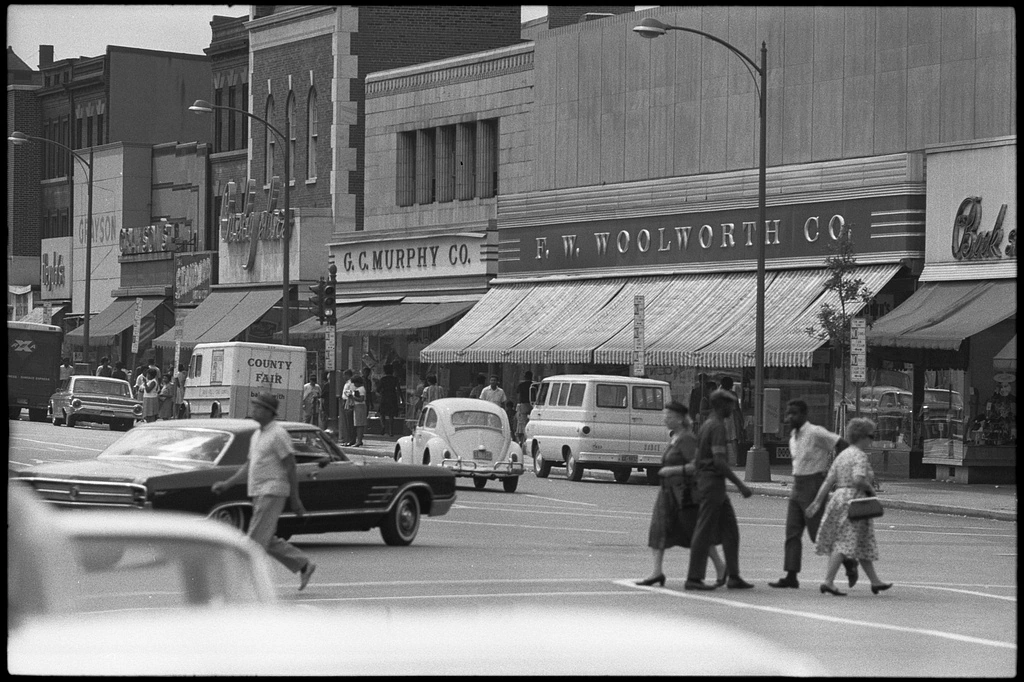
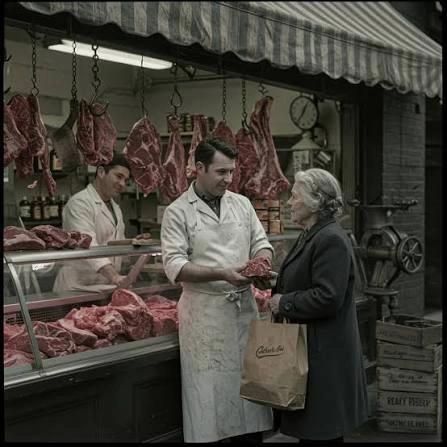
Many of us can remember a business like that. A butcher who knew the cuts your family liked. A furniture seller who remembered every piece in your home because she had helped you choose it. A place where recognition was not a campaign. It was simply how the business worked.
What personal means. Not targeting. Not a first name inserted into a message. Memory, continuity, judgment, and care.
The best experiences in our lives were personal long before anyone called them personalized.
02 · Our part
We spent our careers in B2B technology because we believed better tools would make work better for people.
Many of us started close to the work as SDRs, CSMs, product managers, and engineers. Some of us worked together. Others took different paths and came back with different scars. We knew the pressure behind the roadmap, the promise made in the sales meeting, and the customer waiting on the other side of both.
We helped create products, implement systems, and grow companies. We watched customers do things that had not been possible before. A lot of that progress was real. We are proud of it.
We also have to be honest about what it did not guarantee.
It did not guarantee that a customer would feel remembered. It did not guarantee that an employee would have the knowledge and freedom to do work that mattered. It did not guarantee that an owner would have more time for the people who walked through the door. It did not guarantee that a leader would see a problem before the customer and employee had already lived it.
We were not spectators to this system. We helped shape it, sold it, managed it, benefited from it, and kept adding to it.
The tools improved. Too often, the experience did not.
We did not arrive here because people stopped caring. We arrived here because businesses learned to optimize what they could measure: scale, speed, efficiency, and lower cost. Each decision made sense on its own. Together, they made the relationship easier to measure and harder to feel.
An insider diagnosis. Orbital did not begin with a rejection of technology. It began with people who spent their careers inside it and could no longer ignore the experience it left behind.
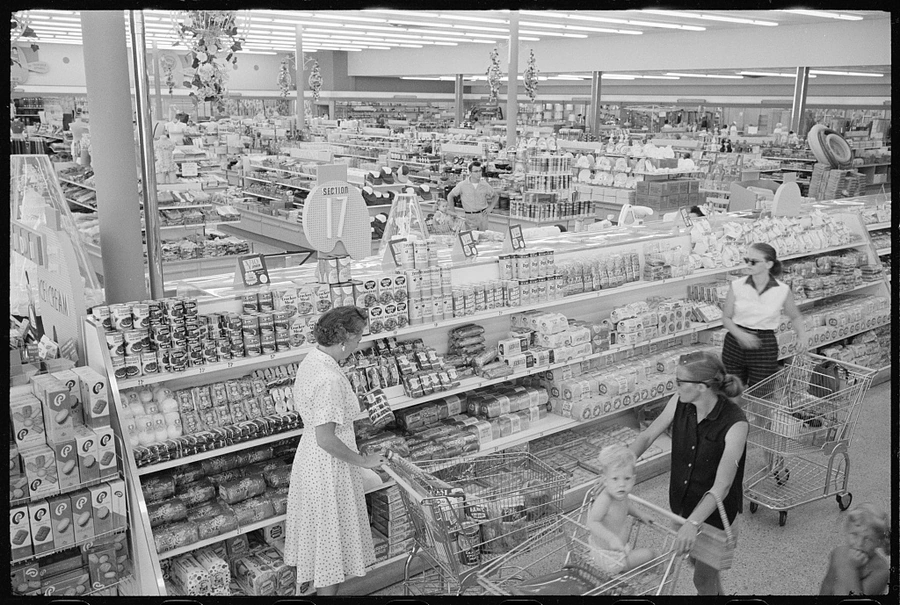
Technology gave us access, choice, and reach. It did not guarantee a human experience.
Women shopping in a Giant food store, 1958 · Library of Congress · No known restrictions on publication
03 · The paradox
We have more information about customers than any local merchant could have imagined. Yet customers routinely walk into a company that has no idea who just entered its story.
The CRM knows the account. The service platform knows the case. The AI agent knows the conversation. The commerce system knows the purchase. Each system is doing its job. No system is responsible for carrying the whole relationship across them.
A person does not experience a company as a collection of systems. They experience one promise. When understanding disappears at a handoff, the company makes its own complexity the customer's burden. The customer has to reconnect the fragments, explain what happened, and prove what the business should already know.
Then a person moves between those systems.
The conversation becomes a ticket. The promise lives in a call recording. The complaint sits in a case. The policy is buried in a document. The signal that something is wrong appears after the moment to act has passed.
The company has the data. The relationship has no memory.
This is the paradox of the digital experience. More intelligence in the stack does not guarantee more understanding in the experience. We optimized isolated interactions and called the collection a journey.
Businesses have never known more about people and remembered less about them.
Everyone feels the reset.
The owner adds tools, channels, feeds, reviews, rules, and reports just to keep up. All they wanted was to know their customers and treat them well. Now the machinery competes with the reason they started.
The employee searches for a history the company already possesses while the customer waits. Time that could have been spent doing meaningful work, solving problems, and helping people is spent assembling the fragments.
The leader has more reports and more blind spots. The truth arrives after the experience has broken, after the employee has improvised, and after the customer has decided what the company truly values.
The customer feels all of it. The kiosk that cannot adapt. The IVR that sends them back to the beginning. The bot that answers the question it recognizes. The agent who asks them to repeat a story they have already told three times.
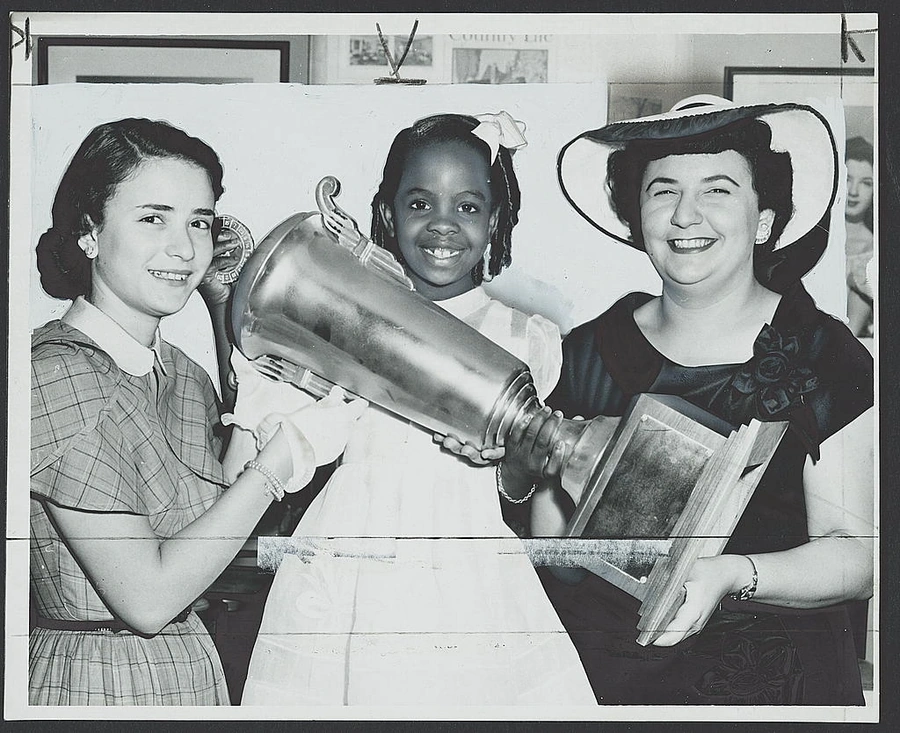
Orbital is not here to replace the people who serve customers. It gives them more room to listen, decide, create, and care.
Community award presentation, 1952 · Library of Congress · No known copyright restriction
The past is not the model. Its standard of recognition is.
We are not nostalgic for less capable technology. We are nostalgic for relationships that did not reset every time we walked through another door.
Internal visual direction · user-provided image · provenance, rights, and high-resolution original pending
Those businesses were not personal because they had less technology. They were personal because the relationship remained whole.
The butcher remembered the family and the rhythm of their visits. The furniture seller remembered how each room came together. The shoe seller remembered because a career had unfolded across years of conversations.
Known. Seen. Valued. Understood.
We are not trying to recreate the past. We are trying to recover its standard of recognition, extend it to more people, and pair it with the access, agency, and accountability progress made possible.
Being remembered is only a gift when the person can trust what happens next. What a business knows should help it serve, not corner or manipulate. Care includes knowing what not to use.
The answer is not to recreate the old storefront. It is to let the relationship survive every new door.
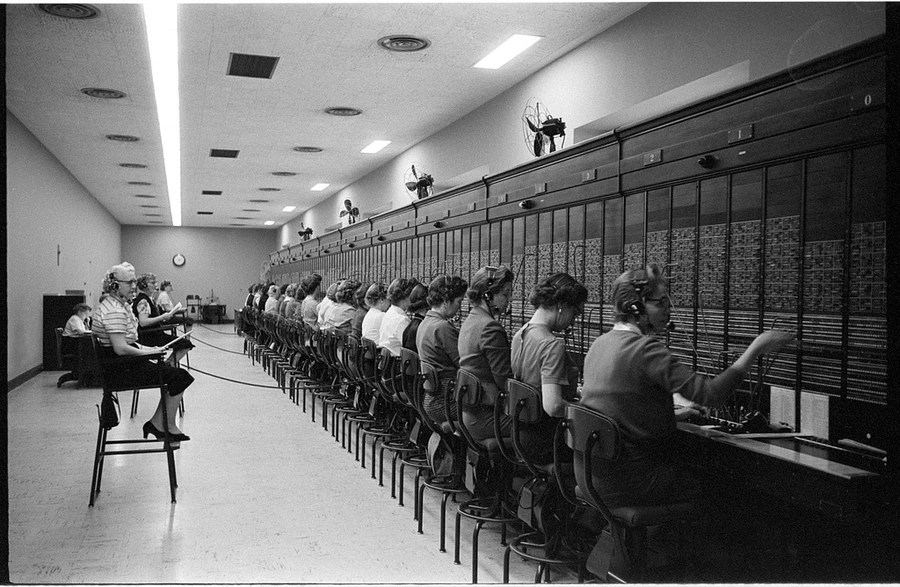
Telephone operators at a switchboard, 1959 · Library of Congress · No known restrictions on publication
AI can accelerate the old failure. Or it can help us reverse it.
AI has changed what a company can know, create, and do. That power does not arrive with a purpose attached.
We can use it to process more people with less understanding. We can build faster versions of the same fragmented journey. We can automate customers further away from anyone who can take responsibility.
Or we can use it to carry memory and understanding across the systems, teams, handoffs, and time that divided the relationship in the first place. We can give employees the knowledge and freedom to do work that matters. We can let automation handle the administrative work while people exercise judgment, creativity, and care. When efficiency only removes cost, it can remove care with it.
AI can make capability abundant. It cannot make trust automatic. Trust still depends on what a company chooses to remember, how it uses that memory, and whether the person feels the benefit.
That is the possibility we could not stop thinking about.
Your Customer Operating System.
That is why we started Orbital.
Most technology improves the interaction it owns. Orbital helps the relationship continue beyond it.
A business should not have to choose between the economics of scale and the experience of being known.
Orbital connects customer signals across siloed systems and carries useful memory across people, AI, channels, handoffs, and time, so the operation can recognize what has changed and respond without forcing the customer to begin again.
That continuity changes what becomes possible. An employee can spend more time doing work that matters. An automated experience can respect the history that came before it. A leader can see a meaningful change while there is still time to respond. The customer can move through the business without carrying the business's memory for it.
A Customer Operating System keeps a handoff from becoming the customer's problem.
But continuity is only the beginning. Every resolved issue should leave behind something useful: a clearer signal, a stronger playbook, and a better next action.
The point is technology that helps the relationship continue without making the customer explain it again.
Every interaction should make the next one better.
A relationship that only remembers can still repeat its mistakes. Orbital turns outcomes into governed learning: not just what happened, but what worked, what changed, and what should improve next. When one customer reveals a problem, the business can recognize who else may be affected and respond before they have to ask.
Observe. Bring together the case, the customer's history, and signals from the systems around them.
Understand. Recognize patterns, reveal what people need to know, and find the gaps in institutional knowledge.
Improve. Propose better playbooks, knowledge, and next actions for people to review and govern.
Return. Carry the approved learning into the next customer moment, wherever it begins.
Each outcome becomes the next observation.
The system remembers each customer. Then it helps the business use what one interaction teaches to serve the next customer better, often before they have to ask.
Orbital connects customer signals across silos so brands can give customers and employees what they need in the moment, and learn from every interaction.
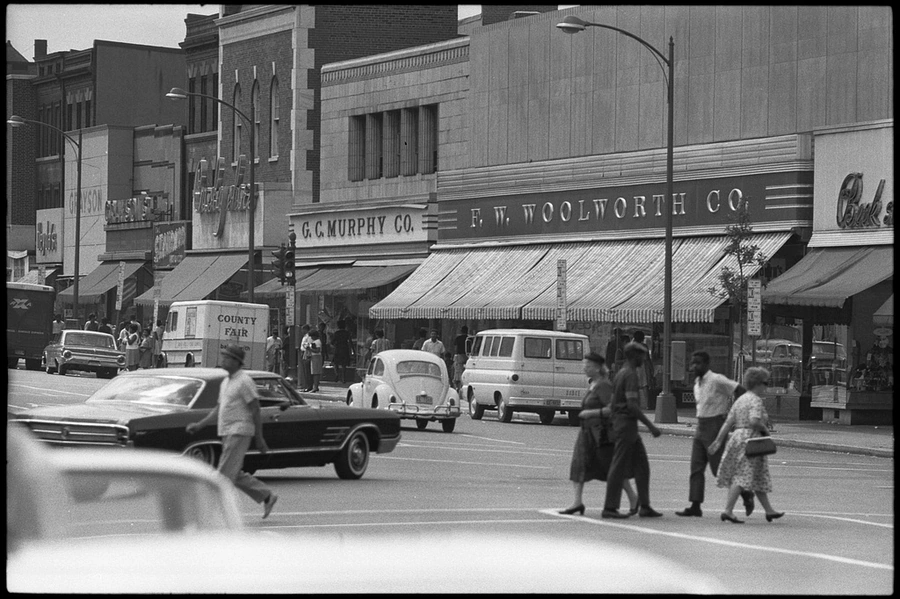
Neighborhood shops and customers, 1965 · Library of Congress · No known restrictions on publication
Making personal possible.
We do not want the future to feel like a faster version of being forgotten. We want it to feel like walking into a place where the relationship already knows why you are there.
The technology of the future that provides the human experience of the past.